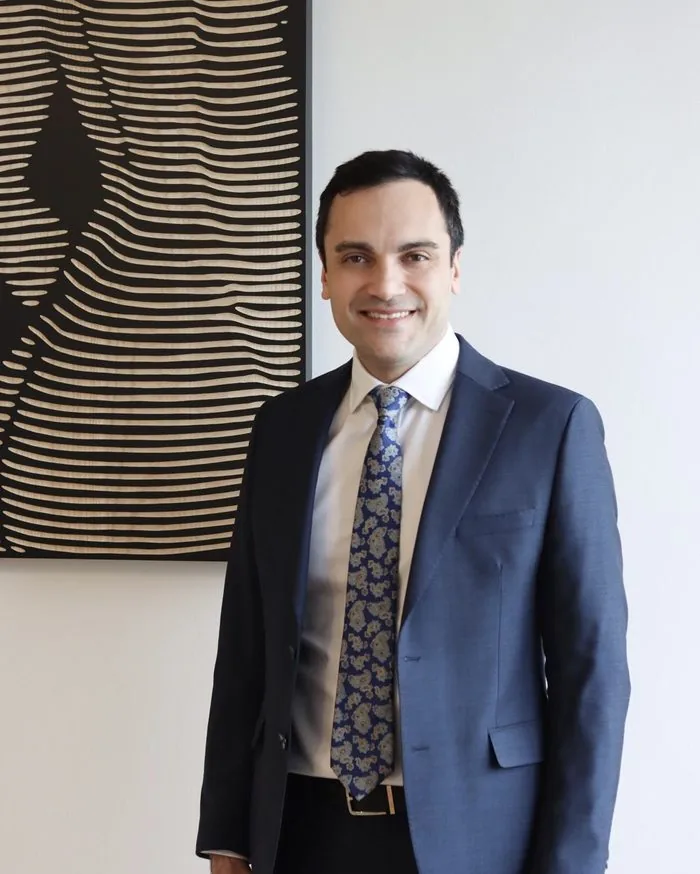
Surgeon credentials
Dr. Erdal holds dual board certification:
- FACS — Fellow of the American College of Surgeons (Chicago, 2025). Requires verified training, ethics review, and ongoing professional standards.
- FEBOPRAS — Fellow of the European Board of Plastic, Reconstructive and Aesthetic Surgery (2020). The European specialty board for plastic surgery.
- Doçent (Associate Professor, 2024) — Turkish academic rank requiring sustained research output and teaching contribution.
Plastic surgery board certification (Türkiye) since 2019. Memberships: TPRECD, EPCD, EBOPRAS, ISAPS, ASPS, ACS, Istanbul Medical Chamber. ORCID 0000-0002-5261-0025. 28 peer-reviewed publications. Full profile: about page.
JCI-accredited hospital
All revision surgeries are performed at a Joint Commission International (JCI) accredited hospital in Istanbul. JCI is the international gold standard for hospital quality, originating from the same Joint Commission that accredits hospitals in the United States. Accreditation requires:
- Standardised surgical safety checklists (WHO surgical safety checklist)
- Medication safety protocols
- Infection control surveillance and reporting
- Patient identification verification
- Hand hygiene programmes with measurement
- Adverse event reporting systems
Re-accreditation every 3 years requires demonstrating sustained compliance.
Anaesthesia standards
All revision surgeries are performed under general anaesthesia by board-certified anaesthesiologists. Standard equipment and monitoring:
- Continuous ECG monitoring
- Pulse oximetry, capnography
- Non-invasive blood pressure every 3 minutes
- Body temperature monitoring
- BIS (depth of anaesthesia) monitoring
- Intermittent pneumatic compression for DVT prophylaxis
- Active warming throughout to prevent hypothermia
Pre-op assessment includes ECG, full blood panel, coagulation tests, and personal history review. Patients with comorbidities (cardiac, pulmonary) may require additional assessments before clearance.
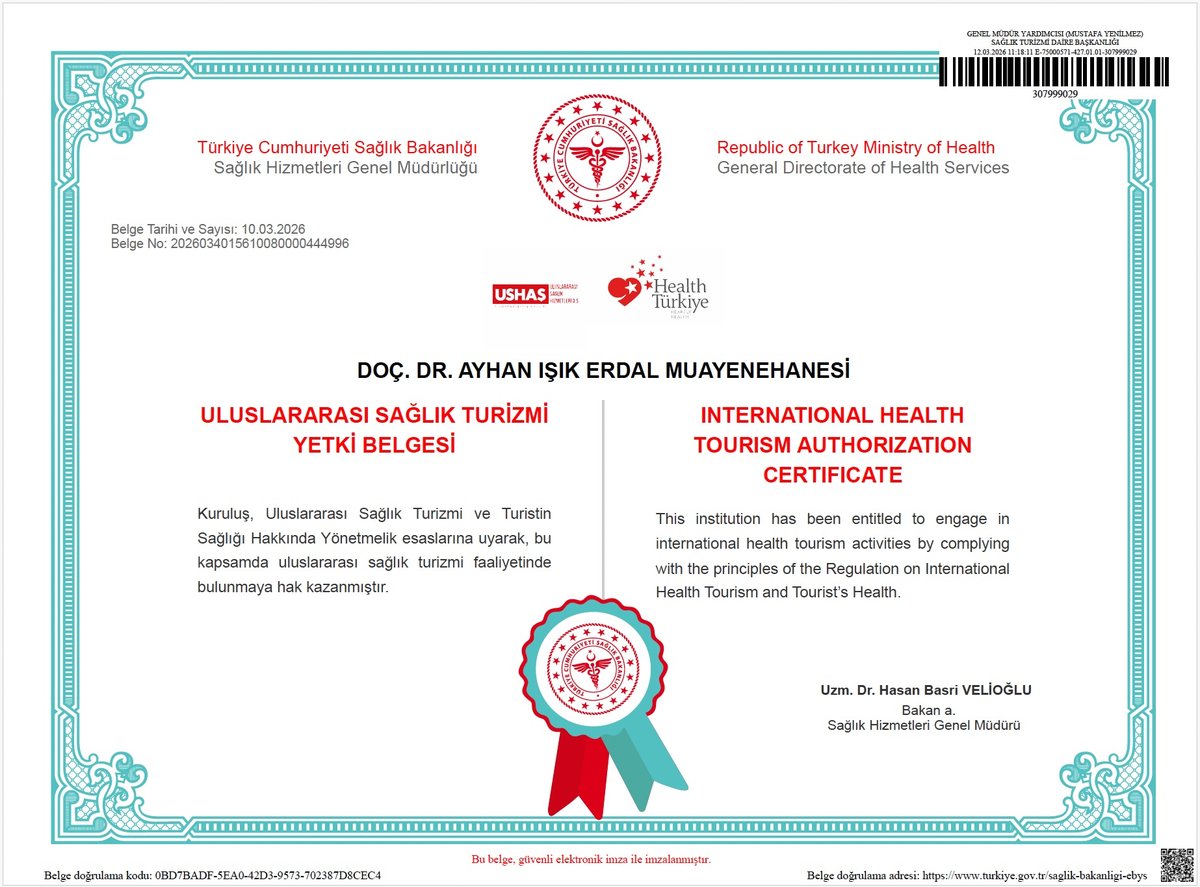
Ministry of Health authorisation
Türkiye's Ministry of Health requires every clinic treating international patients to hold an explicit International Health Tourism Authorisation. The authorisation is not a sticker — the MoH audits the clinic's surgeon credentials, facility standards, infection-control protocols, and complication-tracking systems.
Dr. Erdal's clinic holds Authorisation No. 2026034015610080000444996, issued 10 March 2026, valid through 2026 with annual re-certification. The certificate carries a digital signature and a QR-code for independent verification at turkiye.gov.tr/saglik-bakanligi-ebys.
Complication rates
Revision surgery has slightly higher complication rates than primary surgery because of working in scar tissue and the inherent complexity. Honest published ranges from the international literature:
| Complication | Approximate rate | Management |
|---|---|---|
| Hematoma | 1–3% | Surgical drainage if significant |
| Seroma | 2–5% | Drainage; usually resolves |
| Infection | 1–2% | Antibiotics; rarely implant removal |
| Recurrent capsular contracture | 5–10% (after capsulectomy + plane change) | Repeat surgery if symptomatic |
| Recurrent malposition | 5–15% over 5 years | Repeat capsulorrhaphy if needed |
| Implant rotation (anatomical) | 2–4% | Repositioning surgery |
| Persistent asymmetry | 10–15% | Touch-up revision sometimes needed |
| Wound healing issues | 1–3% | Local care; rarely surgical |
Clinics that publish 0% complication rates are either underreporting or operating on artificially selected patient populations. Honest discussion of complications is itself a safety indicator.
If something goes wrong
The clinic includes complication management for the first 6 months post-revision. This means:
- If a complication arises during the post-op period (drainable hematoma, seroma, infection), management is included — at the same JCI hospital, by Dr. Erdal personally.
- If you need to return to Istanbul for evaluation, transfers and clinic visit are included.
- Communication with your local doctor is provided in writing if needed.
Beyond 6 months, complications are evaluated case-by-case. The clinic remains available for follow-up indefinitely.