
Medically reviewed by
Assoc. Prof. Dr. Ayhan Işık Erdal, MD, FACS, FEBOPRAS
Plastic, Reconstructive & Aesthetic Surgeon
· Last reviewed
Every breast implant is surrounded by a thin scar capsule formed naturally by the body. In most patients, this capsule stays soft and pliable. In some, it tightens, hardens, and distorts — Baker grade 3-4 capsular contracture. Treatment is surgical, and how it's done affects whether it comes back.
A scar capsule forms around every breast implant — this is normal and expected. The capsule is a thin, pliable membrane that helps hold the implant in place. In most patients, this capsule remains thin and the breast feels natural.
In approximately 5-15% of patients, depending on the study, the capsule undergoes contracture: it thickens, tightens, and may calcify. The breast becomes firmer (sometimes painful), the shape distorts (typically rounder, higher), and the implant may become palpable in ways it wasn't before.
Cause is multifactorial: subclinical infection (biofilm), bleeding/hematoma at primary surgery, implant surface, implant plane, and individual immunology.
| Grade | Findings | Treatment |
|---|---|---|
| I | Breast soft, looks natural | None |
| II | Breast slightly firm, looks normal | Observation; medical trial may help |
| III | Breast firm, looks abnormal | Surgery indicated — capsulectomy + exchange |
| IV | Breast hard, painful, distorted | Surgery essential — capsulectomy + exchange |
Surgical treatment is indicated for:
The scar capsule is excised entirely (total capsulectomy) or partially. Total capsulectomy is preferred for grade 3-4 contracture. En bloc capsulectomy means removing implant and capsule together as a single intact unit; indicated when ALCL is suspected or for patient preference.
Strategy for the new implant:
Internal sutures to reshape and reinforce the capsule/pocket after capsulectomy.
The single biggest factor determining whether contracture comes back is how the revision is performed. Strategies that reduce recurrence:
With all of these combined, published recurrence rates fall to under 10%.
Reported recurrence rates vary widely — 15-40% in published literature, depending on technique and surface choice. Strategies that reduce recurrence include complete capsulectomy, changing implant plane, changing surface, and meticulous pocket irrigation. With these strategies combined, recurrence is typically <10%.
Either is reasonable. Capsulectomy with replacement is most common — the capsule is fully removed, new implants are placed (often in a different plane or with different surface). Capsulectomy without replacement is also valid if you no longer want implants.
Capsulotomy means cutting the capsule to release tightness (the capsule remains in place). Capsulectomy means removing the capsule entirely. For Baker grade 3-4 contracture, capsulectomy is generally preferred.
Mild cases (Baker grade 1-2) may not need treatment. Some clinicians report benefit from leukotriene inhibitors for early grade 2 contracture, though evidence is limited. Established grade 3-4 contracture requires surgery.
Free WhatsApp consultation in English with Dr. Erdal's clinic. Send your photos for an initial assessment.
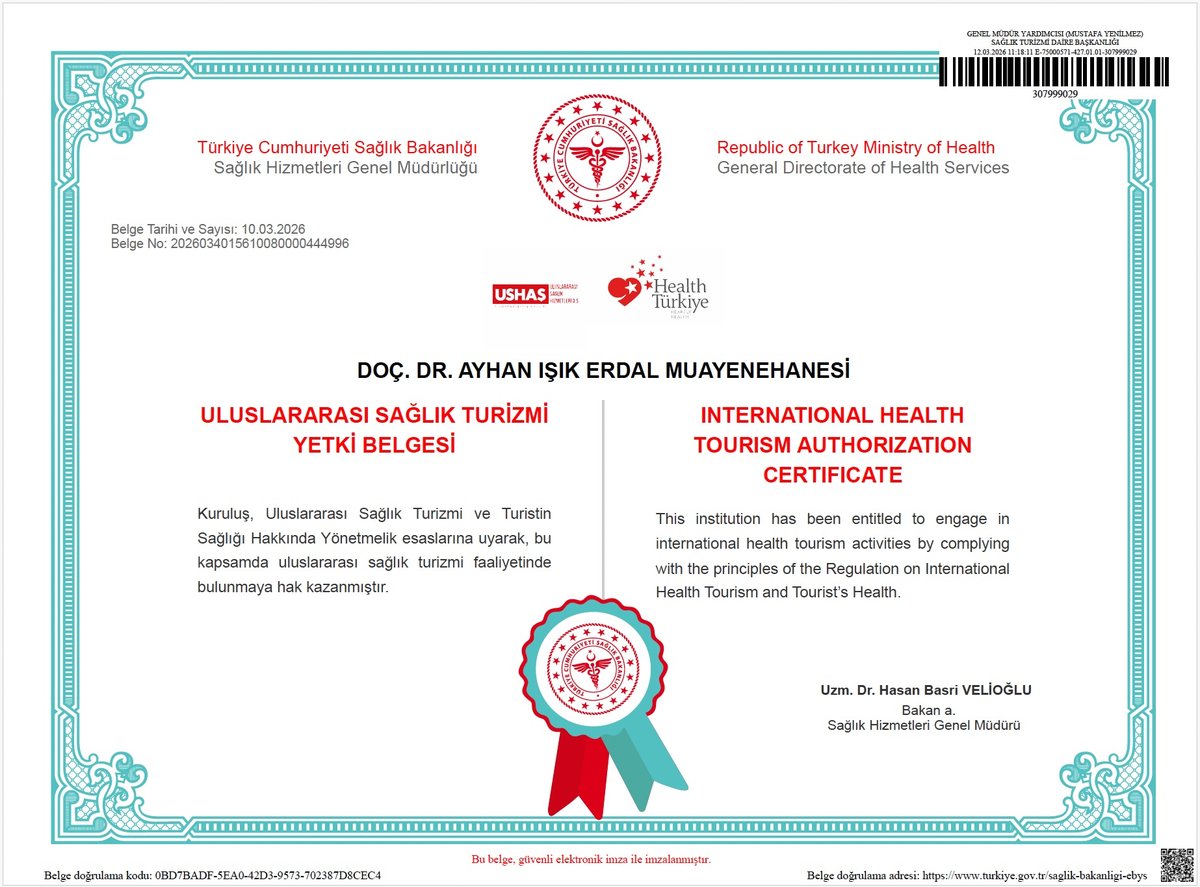
This clinic is officially authorised by the Republic of Türkiye Ministry of Health (Sağlık Bakanlığı, General Directorate of Health Services) to provide international health tourism services. The Ministry audits the clinic's surgeon credentials, facility standards, infection-control protocols, and complication-tracking systems before issuing this certification.
Click certificate to view at full resolution. Document carries digital signature and QR-code verification on the original.