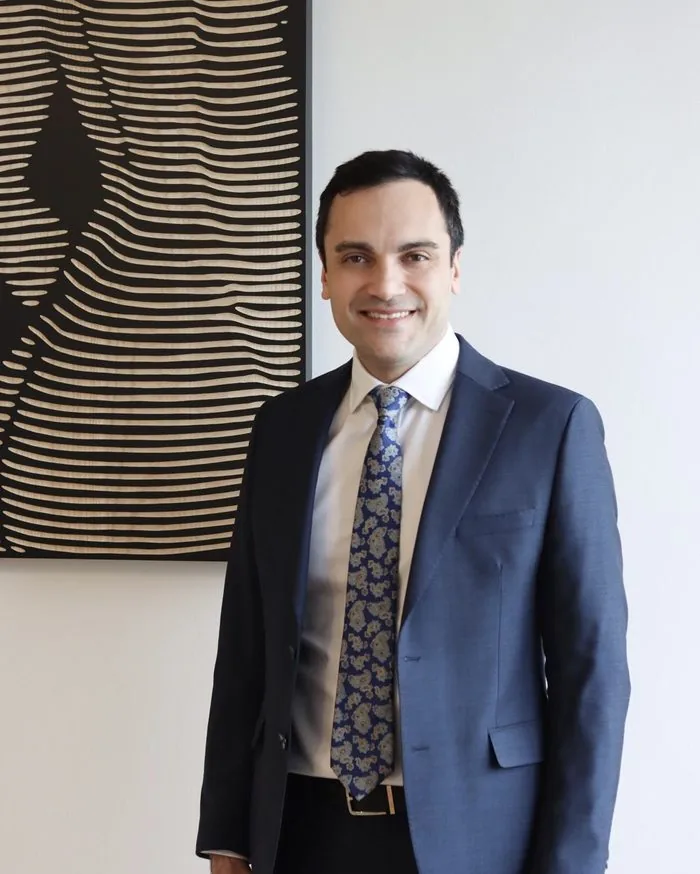
Medically reviewed by
Assoc. Prof. Dr. Ayhan Işık Erdal, MD, FACS, FEBOPRAS
Plastic, Reconstructive & Aesthetic Surgeon
· Last reviewed
Either because old implants are aging, or because your aesthetic priorities have changed in the years since the original. Implant exchange is generally a less complex revision than capsular contracture or malposition repair — but the new implant choice (profile, size, surface) is the decision that determines satisfaction.
The reasons fall into four categories:
Modern silicone implants are durable but not permanent. Over 15-20 years, the silicone shell may develop microcracks, the gel may migrate, capsular changes may develop. Common findings in aged implants:
None of these are urgent emergencies, but exchange is reasonable when present.
The single most common reason for cosmetic exchange in mature patients. High-profile implants placed in 20s often look "fake" in 40s — the upper-pole bulge that was fashionable becomes incongruent with mature aesthetic preferences.
The exchange typically goes:
Profile is determined by the implant's projection (how much it sticks out from the chest) relative to its base width. A 350cc moderate-profile implant takes up more breadth than a 350cc high-profile of the same volume, but projects less.
Two surface options remain in current use:
Most implant exchanges combine size change with the exchange. Slight downsize is most common — typically 25-50 cc smaller. Some patients add 50-100 cc; few add more.
Operative time: 90 min - 3 hours depending on whether capsulectomy is performed.
Pure exchange: similar to size change recovery. Office work week 2; full exercise week 6. Exchange with capsulectomy: similar to capsular contracture recovery. Office work week 2-3; full exercise week 6-8.
No — implants are not 'expiry-dated' and don't need replacement on a fixed schedule. Modern silicone implants in good condition can remain in place indefinitely. Replacement is indicated only if there's a problem (rupture, contracture, dissatisfaction) or if the patient wants change. The 'replace every 10 years' rule is outdated.
Ultrasound or MRI can detect rupture in silicone implants. Saline rupture is usually visible immediately as deflation. The FDA recommends MRI screening at 5-6 years after primary, then every 2-3 years for asymptomatic patients. Most patients do not follow this; symptomatic concerns trigger imaging.
Yes — and this is a common strategy at exchange. Most modern revision practice favours smooth implants over textured. The change is straightforward; the existing implant is removed and a smooth replacement is placed in the same pocket (with capsulectomy if textured implants present capsule abnormalities).
Initial appearance after exchange is close to final, especially when the same pocket is used. Some settling occurs over 3-6 months as tissues adapt to the new implant shape. Most of the visible change you'll see at month 12 is visible at month 3.
Free WhatsApp consultation in English with Dr. Erdal's clinic. Send your photos for an initial assessment.
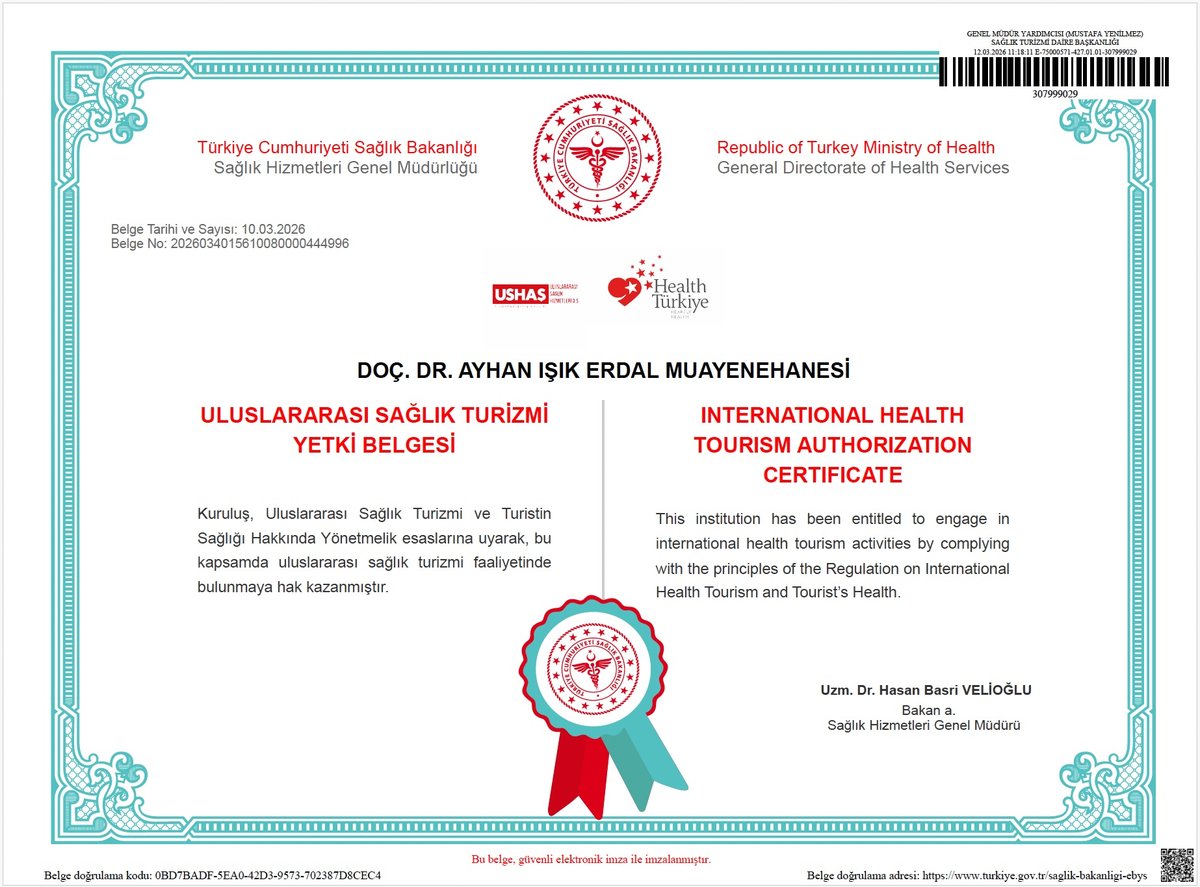
This clinic is officially authorised by the Republic of Türkiye Ministry of Health (Sağlık Bakanlığı, General Directorate of Health Services) to provide international health tourism services. The Ministry audits the clinic's surgeon credentials, facility standards, infection-control protocols, and complication-tracking systems before issuing this certification.
Click certificate to view at full resolution. Document carries digital signature and QR-code verification on the original.